
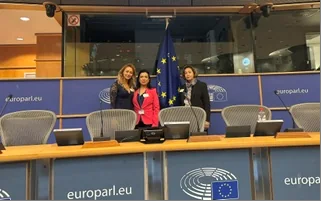
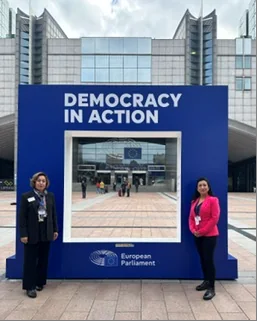
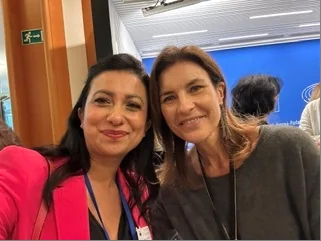
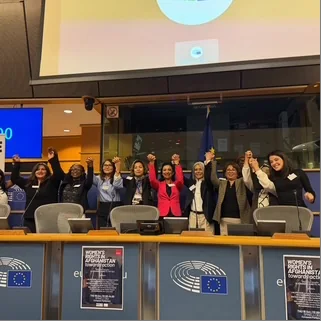
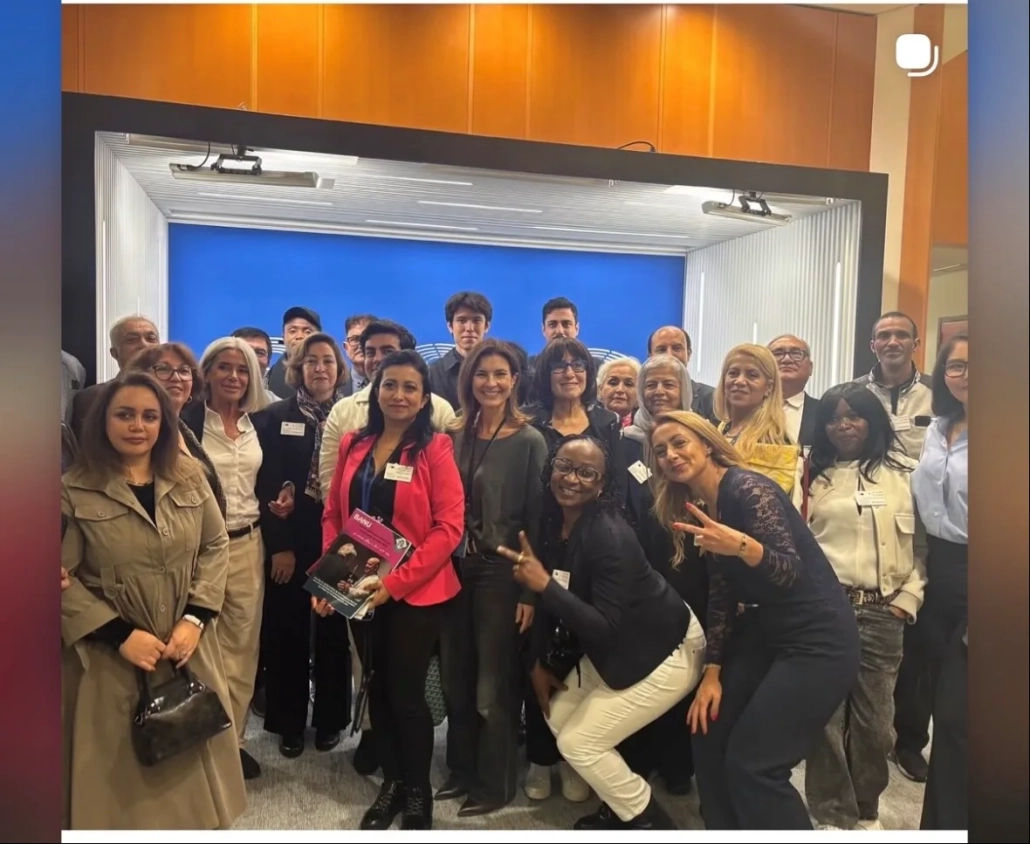
On October 15, 2026, Maryam Singh, director of the Women’s Counseling Service at the Counseling Center for Migrants, participated as an expert from Austria in a conference on the rights of Afghan women at the European Parliament in Brussels. The conference focused on education, economic independence, and access to rights.
The event, organized by the Network of Afghan Diaspora Organizations in Europe (NADOE), brought together human rights activists, policymakers, and representatives of European civil society.
Women’s rights need to be reflected in everyday life
Maryam Singh contributed her experience from practical counseling work in Vienna to the discussion. Her remarks made it clear that protection from persecution is an important foundation—but that women refugees also need reliable prospects after their arrival in Europe.
These include language support, access to the labor market, recognition of prior qualifications, appropriate educational opportunities, child care, and the elimination of structural disadvantages. Afghan women bring a variety of experiences, skills, and career goals with them. Recognizing and fostering this potential is crucial for economic independence and social participation.
Contribute consulting experience to the European debate
This is where the work of the Counseling Center for Migrants begins. The center assists people with issues related to the labor market, residency status, and social matters. The women’s counseling service provides a safe space to develop individual courses of action and to support women in their educational and career paths, as well as in asserting their rights.
Through our daily counseling work, we see what kind of support women actually receive, where legal and institutional barriers exist, and what conditions facilitate their participation. Maryam Singh’s participation in Brussels was an opportunity to share these experiences at the European level and to exchange views with political and civil society actors.
Briefly summarized
Links & advice
Sources

Unsere Berater*innen unterstützen Migrant*innen bei Fragen zu Aufenthalt, Arbeit und sozialrechtlichen Ansprüchen und bietet rechtliche Orientierung sowie individuelle Beratung.
